What is an MSP?
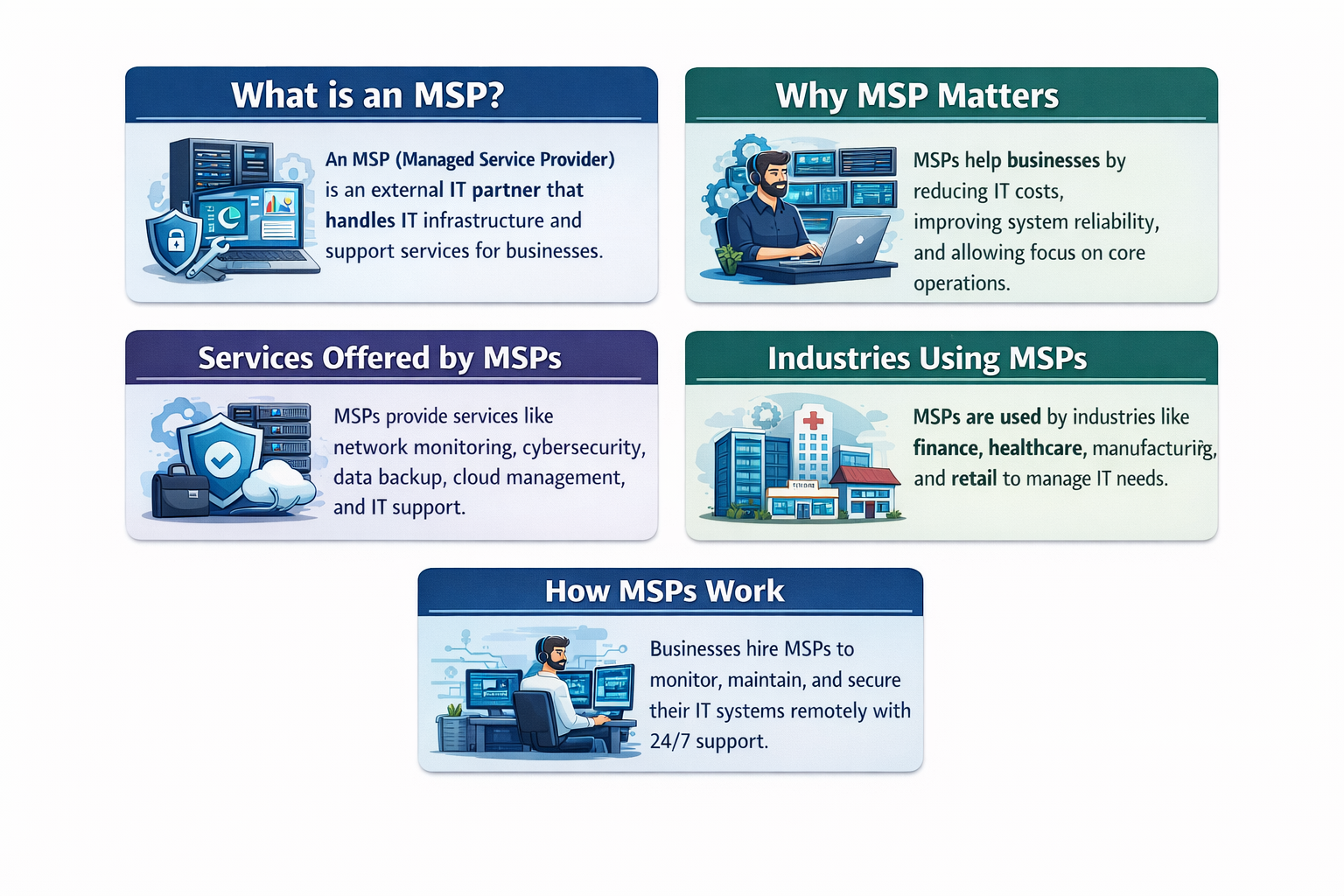
An MSP (Managed Service Provider) is an external IT partner that handles IT infrastructure and support services for businesses. MSPs take responsibility for managing and supporting IT systems, ensuring they run smoothly 24/7, while your team focuses on core business operations.
Why MSP Matters
Managed Service Providers have become essential for modern businesses because they:
- Reduce IT costs by eliminating the need for large in-house IT teams
- Improve system reliability and security through proactive monitoring
- Ensure 24/7 support and rapid response to critical issues
- Allow businesses to focus on core operations instead of IT management
- Provide access to enterprise-grade technology without heavy capital investments
Services Offered by MSPs
MSPs provide a comprehensive range of services to support your business:
- Network monitoring and management to ensure optimal performance
- Cybersecurity services including threat detection and prevention
- Data backup and disaster recovery solutions
- Cloud infrastructure and management
- IT help desk and technical support
- Software licensing and updates
- Security patch management
- Compliance and regulatory support
How MSPs Work
The typical MSP engagement model works as follows:
Your business signs a service agreement with an MSP, defining the scope of services and service level agreements (SLAs). The MSP then remotely monitors your systems using advanced management tools. When issues are detected, the MSP's team responds proactively to prevent downtime. The MSP handles routine maintenance, updates, and security patches, allowing your team to focus on strategic initiatives. Most MSPs operate 24/7 support centers to ensure assistance is always available.
Who Uses MSPs
MSPs serve organizations across all sizes and industries:
- Startups use MSPs to access enterprise-grade IT without building internal teams
- Small and Medium Enterprises (SMEs) leverage MSPs to improve security and reduce costs
- Large enterprises partner with MSPs for specific services and expertise
- Healthcare organizations rely on MSPs for HIPAA-compliant IT solutions
- Financial institutions use MSPs for secure, compliant infrastructure
- Retail companies depend on MSPs for system reliability and PCI compliance
The Future of MSPs
The MSP industry continues to evolve with emerging technologies. Cloud adoption, artificial intelligence, and cybersecurity threats are driving demand for specialized MSP services. Organizations increasingly expect MSPs to provide strategic IT consulting alongside operational support.
Getting Started with an MSP
If your organization is considering an MSP partnership:
- Assess your current IT infrastructure and identify pain points
- Define your business requirements and service expectations
- Research potential MSPs and compare their service offerings
- Request proposals from multiple providers
- Evaluate their expertise, support quality, and pricing model
- Start with a pilot program before full migration